


Why Do Large Industrial Fans Outperform Small Fans? The Science Behind HVLS Technology
The Surprising Truth: Size Isn’t Just About Dimensions—It’s About Airflow Energy
When it comes to fans, most people assume bigger just means "moves more air." But the difference between a small desk fan and a massive 7-meter (23-foot) industrial ceiling fan goes far beyond simple scale. It’s a fundamental difference in how they move air, how far that air travels, and how effectively they cool large spaces. To understand this, let’s start with a powerful natural analogy that everyone can grasp: hurricanes.
The Hurricane Analogy: Why Big Airflow Systems Dominate
Think about a hurricane forming over the open ocean. These massive weather systems generate winds that can travel thousands of kilometers across the sea, maintaining their strength even as they move over vast distances. They don’t just disappear after a few miles—they carry their energy across entire continents.
Why? Because a hurricane creates an enormous, cohesive column of moving air with tremendous kinetic energy. This massive airflow is so powerful that it resists being dissipated by the surrounding still air. It’s only when the hurricane hits land—where buildings, trees, and terrain disrupt and absorb its energy—that it gradually weakens and dies out.
How This Applies to Fans: Small Fans vs. Large HVLS Fans
The exact same principle applies to fans. Let’s break down the science:
Small fans (desk fans, pedestal fans, even small ceiling fans) create a narrow, high-speed jet of air. This jet has very little total energy. As soon as it leaves the fan blades, it immediately starts mixing with the still air around it. The surrounding air quickly absorbs and dissipates this small amount of energy, so the airflow dies out within just a few meters.
To compensate, small fans have to spin extremely fast. This creates that uncomfortable, direct "blast" of air we all know—either you’re standing directly in the narrow stream and get blown around, or you’re a few feet away and feel nothing at all. There’s no middle ground, and they can’t cool more than one or two people effectively.
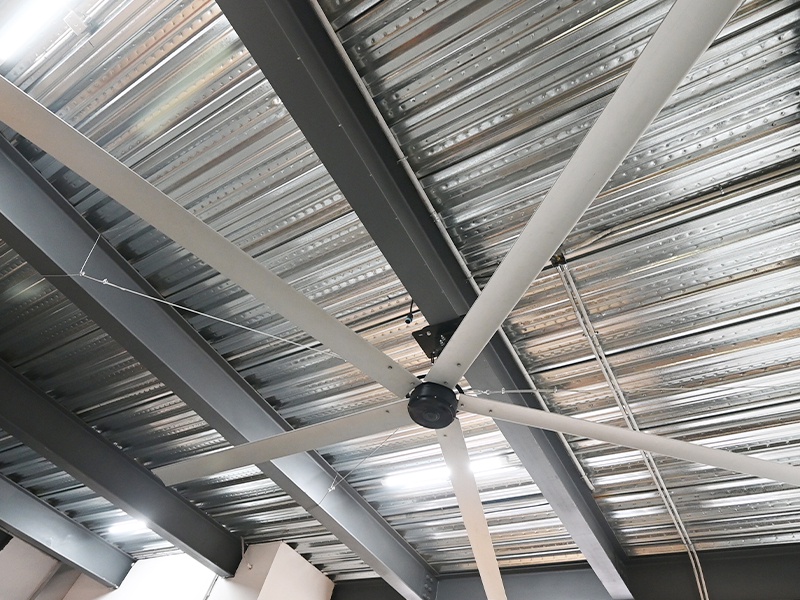
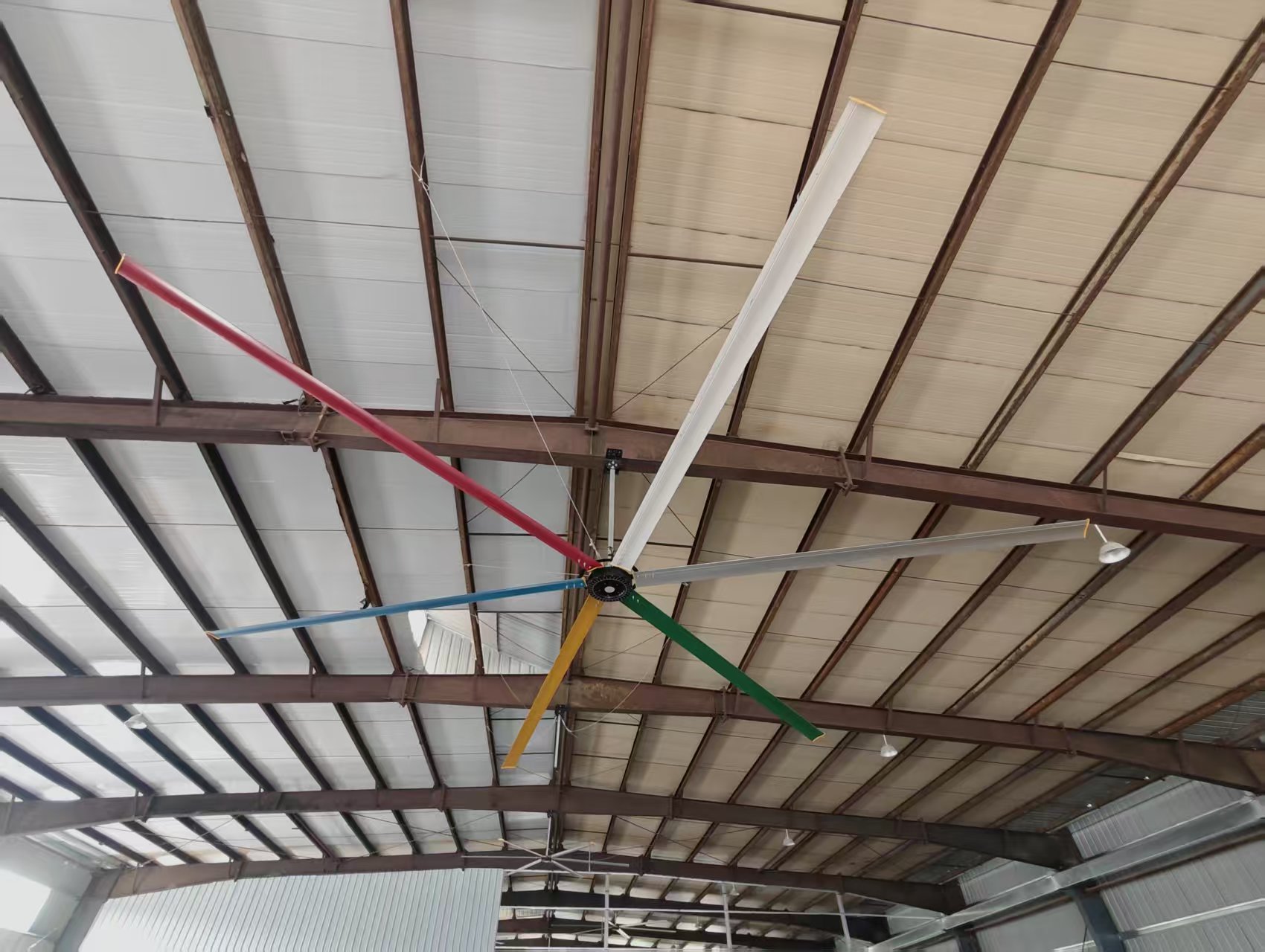
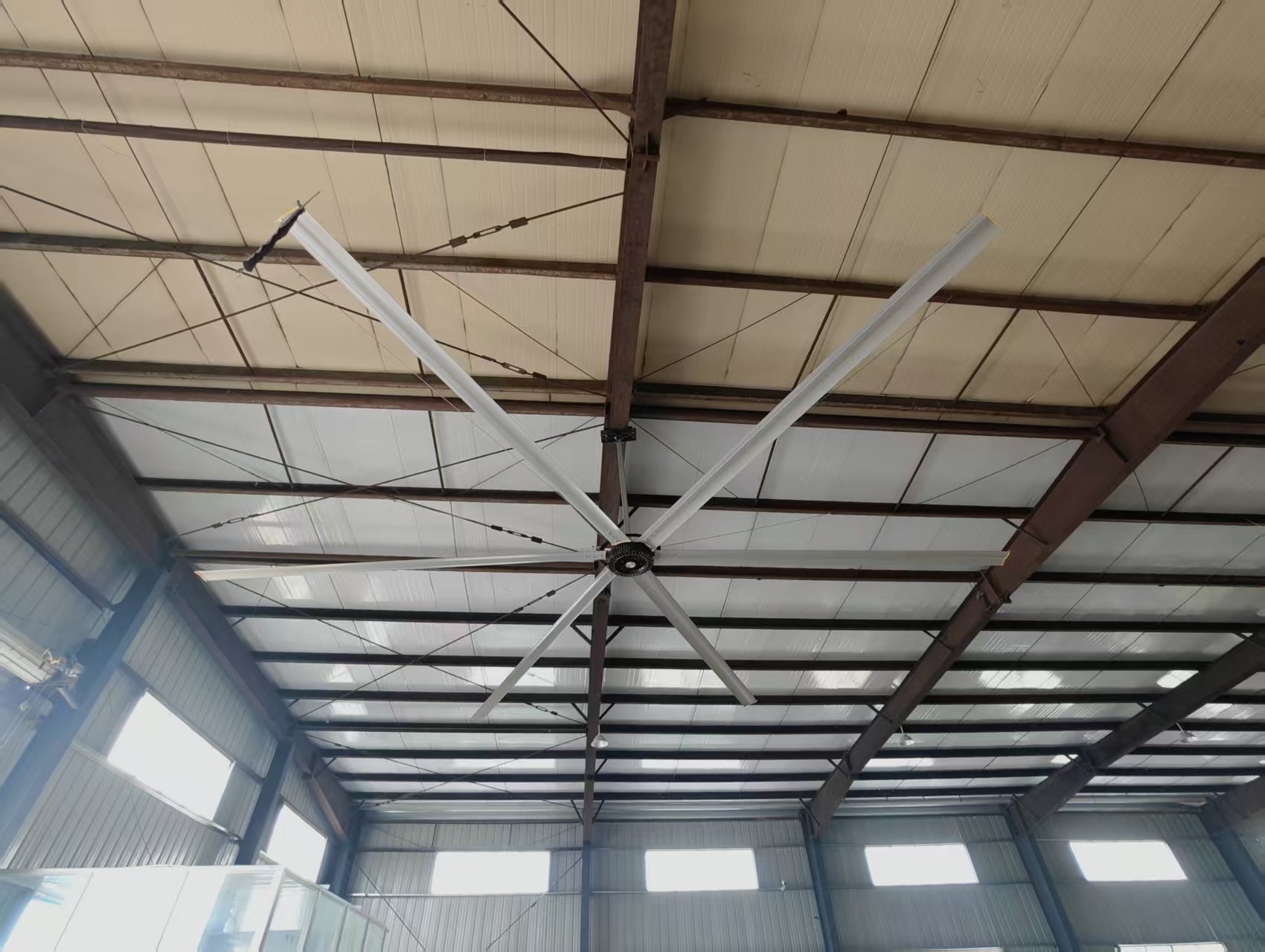
Large HVLS (High Volume, Low Speed) fans work completely differently. A 5-7 meter (16-23 foot) diameter fan doesn’t create a narrow jet—it moves an enormous, continuous column of air that fills the entire space. This massive airflow has far more total kinetic energy, just like a hurricane.
Even as it travels downward and outward across the floor, this cohesive air column resists dissipation. It can travel 15-20 meters (50-65 feet) from the fan before friction with the air and obstacles significantly reduce its speed. This means one large fan can effectively cool an area of up to 1,000 square meters (10,700 square feet)—something that would require dozens of small fans to achieve.
The Key Advantages of Large Industrial Fans
The difference in airflow energy translates to four critical benefits that small fans simply can’t match:
1. Low Speed, High Volume: Large fans spin slowly (typically 50-150 RPM) but move massive amounts of air. This creates a gentle, natural breeze that cools people without the uncomfortable blast effect of high-speed small fans.
2. Exceptional Airflow Distance: The large air column travels much farther, reaching every corner of even the biggest spaces.
3. Unmatched Coverage Area: One large fan can replace 10-20 small fans, drastically reducing energy costs and maintenance.
4. Even Temperature Distribution: Large fans circulate air throughout the entire space, eliminating hot spots and cold spots that small fans can’t address.
Where Large Industrial Fans Shine
These advantages make large HVLS fans ideal for any space with high ceilings and a large footprint:
• Manufacturing facilities and warehouses
• Distribution centers and logistics hubs
• Gymnasiums and sports facilities
• High-ceiling offices and conference rooms
• Retail stores and shopping centers
• Agricultural buildings and barns
The Bottom Line
The difference between large industrial fans and small fans isn’t just about size—it’s about physics. Small fans create weak, short-lived jets of air that dissipate quickly. Large HVLS fans create powerful, cohesive air columns that carry their energy across vast distances, providing efficient, comfortable cooling for entire spaces.
When you’re looking to cool a large area, investing in a high-quality large industrial fan isn’t just a better option—it’s the only option that makes sense for both comfort and cost-effectiveness.
Navigation
 How Does a PMSM Motor Work? The Core Technology Behind HVLS Industrial FansApr 24 2026
 Why Do Large Industrial Fans Outperform Small Fans? The Science Behind HVLS TechnologyApr 23 2026
 Complete Maintenance Guide for PMSM Industrial Fans: Ultra-Low Maintenance Cost, 15 Years of Hassle-Free OperationApr 20 2026
 HVLS Large Fans vs Industrial Small Fans: 5 Core Differences for Optimal VentilationMar 20 2026
Send Us A Message