


Our Industrial Ceiling Fan Focus: Products, Applications and Clear Information
Welcome to our industrial ceiling fan introduction. This website brings together HVLS product information, component references and application photographs for readers exploring air movement in commercial and industrial buildings. The focus is practical: understanding the available product families, asking the right project questions and keeping the final configuration clear. For a buyer, useful detail should begin before a quotation and remain understandable after a product has been selected.
A ceiling fan is part of a working environment, not an isolated item on a price list. Its diameter has to relate to the space. Its mounting arrangement has to suit the structure. Its controls have to make sense to the people who operate it. This introduction explains the subjects covered by our materials and the approach we invite customers to take when discussing an HVLS fan project.
A Product Focus Built Around Different Spaces
The product information prepared for this website includes the E680 and E730 families. The supplied E680 sheet describes a smaller-diameter range, from 1.8 to 4.3 meters, for medium-sized commercial and industrial spaces. The E730 brief describes a larger range, from 4.9 to 7.3 meters, with a PMSM drive and an integrated variable frequency controller. The two families provide different starting points for a site-specific discussion.
That breadth matters because buildings are not interchangeable. A compact workshop may have several distinct occupied areas. A warehouse may combine open floor space with tall storage racks. A restaurant may need air movement around seating without treating every part of the premises alike. The product conversation should acknowledge those differences instead of reducing selection to the total floor area.
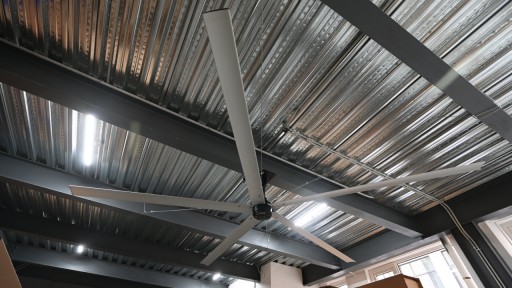
Applications Come Before a Diameter Recommendation
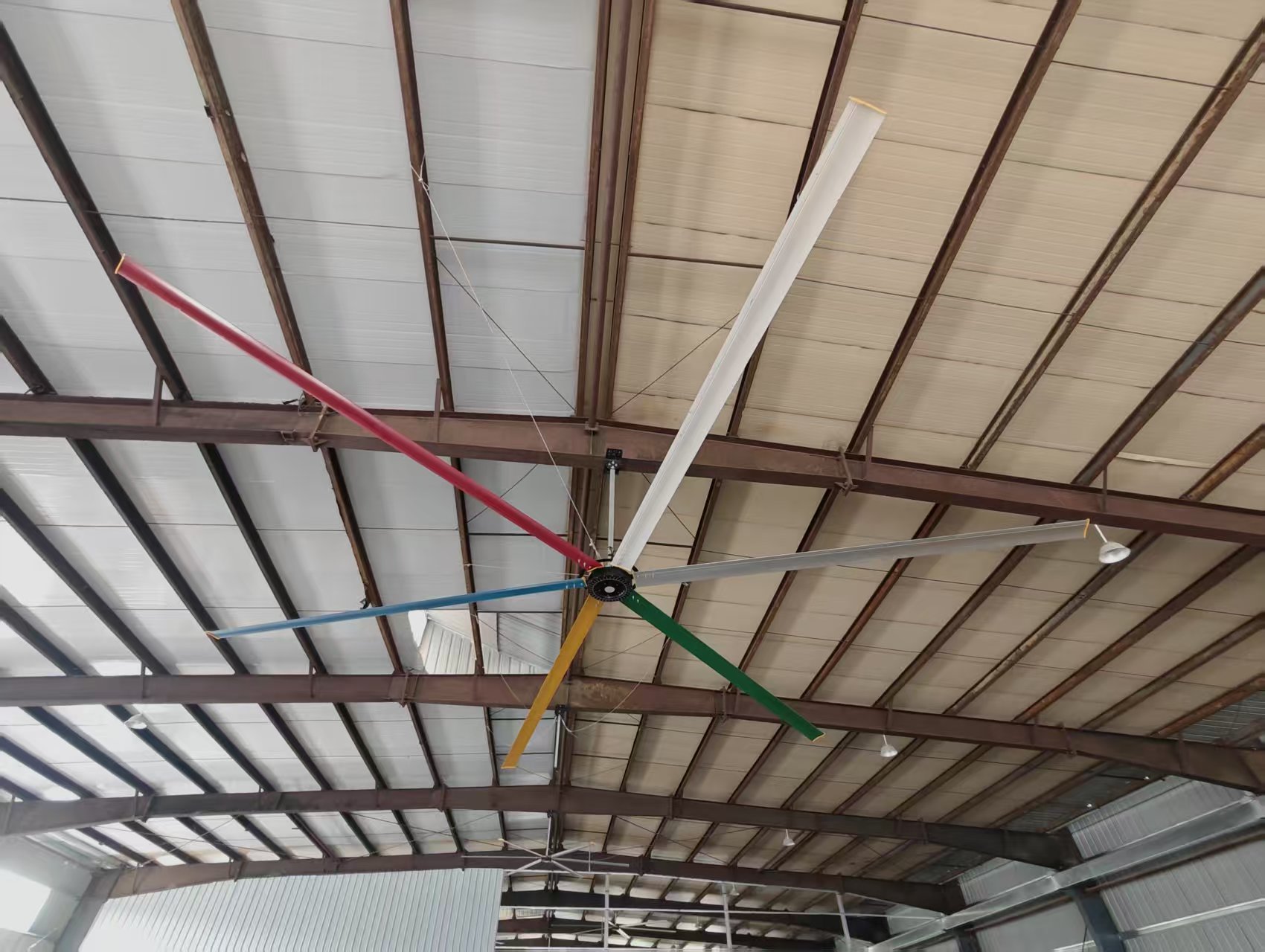
When you contact us about a project, describe the activity taking place under the proposed fan. Is it packing, assembly, retail service or another use? Explain whether people remain at fixed stations or move through the space. Include nearby equipment and any restrictions that may affect placement. A few clear photographs often communicate these conditions better than a long list of general preferences.
This does not replace an engineering assessment. It helps establish the questions that the assessment must answer. Roof and floor photographs, a layout drawing and electrical supply information form a stronger starting point than a request for the biggest available model. The next step should be a documented selection process tied to the chosen fan and the actual building.
Why We Present Components as Well as Finished Fans
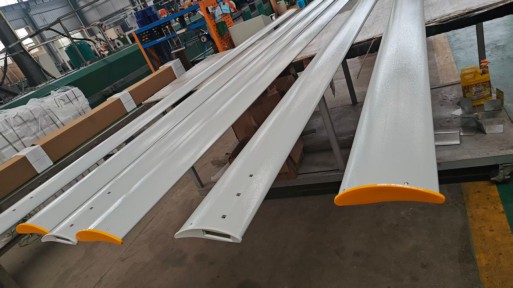
A finished industrial ceiling fan is easy to recognize, but the supporting parts deserve attention too. The supplied parts presentation identifies items such as a controller, permanent magnet motor, downrod, mounting components, wire rope, blades and associated hardware. It illustrates how a complete system includes more than the visible blade assembly. Buyers reviewing a scope of supply benefit from seeing those categories clearly.
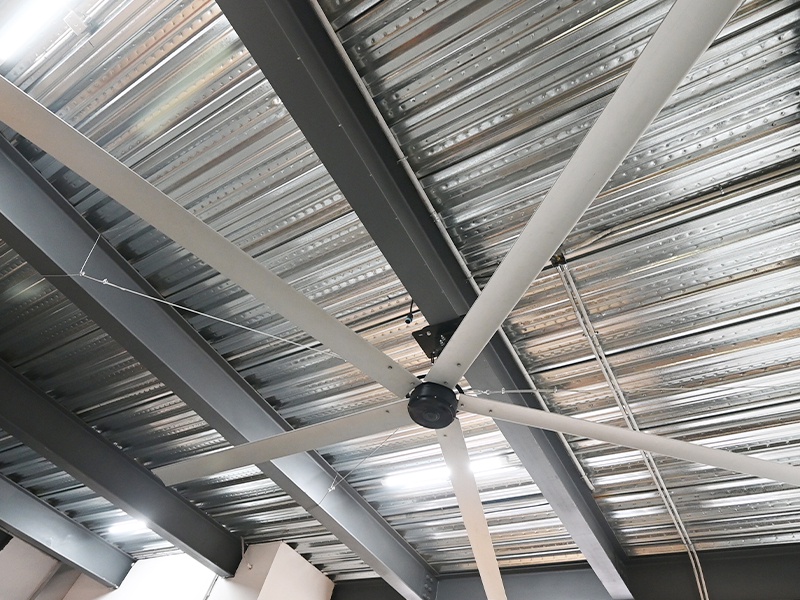
The parts presentation shows a particular six-blade configuration. It should not be treated as the universal packing list for every fan mentioned on this website. The E730 materials, for example, describe a five-blade design. Keeping those distinctions explicit is important for both purchasing and handover. The correct reference is the confirmed parts list for the model being ordered.
Detail Should Remain Attached to Its Model
Model numbers help connect specifications, photographs and documents. A diameter alone cannot establish the correct motor, blade material or controller. Where several files describe different versions, the final equipment record should identify the selected version and the applicable documents. This is especially important when an inquiry develops over time or more than one person contributes information.
Our website materials are best used as an introduction to that conversation. If a specification is essential to your application, identify it in the inquiry and ask for confirmation for the offered configuration. This makes the decision easier to review and avoids carrying an attractive figure from one document into a different product proposal.
A Clear View of Controls and Everyday Use
For an installed fan, the operating interface is part of the product experience. The E730 website brief describes access to current, voltage and speed information, with an optional centralized-control arrangement. Those features should be considered in relation to the people using the equipment, the number of occupied zones and the expected operating schedule.
A single fan in one room may call for a different arrangement from several fans serving independent work areas. The relevant question is not simply whether an advanced option exists, but whether the proposed configuration supports the required routine. Tell us how you expect the equipment to be used so that the control discussion can stay connected to the application.
Technical Information Without Overstated Promises
HVLS equipment moves air. It should not be presented as a refrigeration system or as a guaranteed way to achieve a particular room-temperature reduction. Occupant comfort, airflow distribution and energy use need to be evaluated in their actual context. Product literature is useful for understanding an offering, while a project outcome requires its own evidence.
The same discipline applies to certification, warranty and environmental suitability. These should be confirmed for the exact product and destination where they matter, rather than inferred from a general image or a different series. We encourage buyers to raise essential requirements early so that the relevant documents and any remaining questions are visible before a purchase decision.
A Starting Point for Project Conversations
Different readers arrive with different levels of information. Some have a measured drawing and an equipment schedule. Others are still identifying the uncomfortable areas in a building. Both can begin with a concise description of the space and the intended use. An early inquiry does not need to contain a finished design, but it should distinguish known facts from preferences and open questions.
If the project involves several sites, describe them separately. A model suitable for one layout may need a different review elsewhere. Likewise, a desired controller option or appearance choice should be stated as a requirement to confirm, not assumed to be standard across every series. Clear communication makes the scope of the discussion easier for everyone to follow.
Start with Your Building and Your Priorities
Our industrial ceiling fan content is intended to make product exploration more concrete. It combines the visible product with the less visible questions about configuration, operation and documentation. The objective is a useful exchange: a buyer can explain the application, identify the required information and understand what still needs verification.
To start that exchange, send the building dimensions, photographs of the proposed area, the available power supply and a short description of your priorities. Include the model name if you already have one in mind. Whether you are comparing compact HVLS options or reviewing a larger fan arrangement, a clear project brief is the best foundation for the next conversation.
Navigation
 E730 HVLS Fan Controls: A Closer Look at Operation and PlanningSep 04, 2026
 Our Industrial Ceiling Fan Focus: Products, Applications and Clear InformationSep 04, 2026
 How Does a PMSM Motor Work? The Core Technology Behind HVLS Industrial FansApr 24, 2026
 Why Do Large Industrial Fans Outperform Small Fans? The Science Behind HVLS TechnologyApr 23, 2026
Send Us A Message