


E730 HVLS Fan Controls: A Closer Look at Operation and Planning
The control system is easy to overlook when comparing industrial ceiling fans. Diameter is visible in every product image, while the controller may appear only as a small detail in a brochure. Yet the way a fan is started, adjusted and monitored shapes its everyday use. This technical product spotlight examines the E730 HVLS fan controls described in the supplied website materials and the planning questions behind those features.
The E730 brief identifies a PMSM drive and an integrated variable frequency controller. It also describes a touch-screen interface with access to current, voltage and speed information, plus an optional wireless centralized-control arrangement. These are product features to evaluate against an operating plan. They are not evidence of a particular site's energy savings, network performance or maintenance results.
Put the Operator at the Center of the Discussion
The first control question is a practical one: who will use the system? A supervisor adjusting one fan in a workshop has different needs from a facilities team coordinating several occupied areas. Access arrangements, shift patterns and the distance between zones influence which interface is convenient. Those details should be discussed before the control specification is finalized.
A useful inquiry explains when fans are expected to run, who may change the settings and whether different areas need independent operation. It can also identify areas that are normally unoccupied. This creates a clearer operating brief without assuming that a centralized system must always be preferable to local control. Complexity is worthwhile only when it supports a defined need.
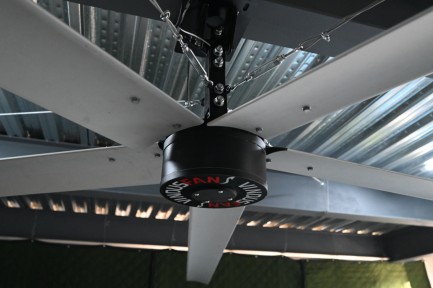

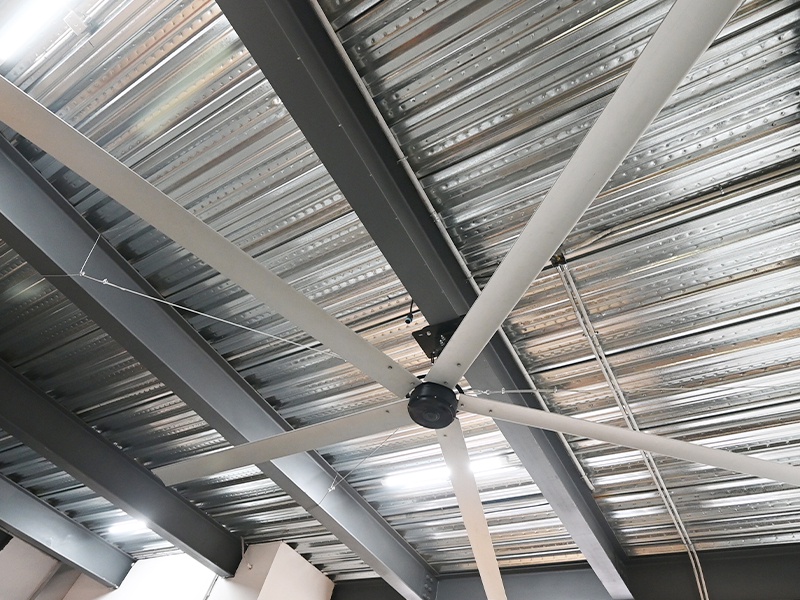
E730 product detail; the selected motor and controller must be documented as one configuration.
Source file: DSC_9741.JPG
Understand What the E730 Brief Actually Describes
Motor and Controller Belong to One Configuration
PMSM stands for permanent magnet synchronous motor. The E730 product materials pair that motor description with variable frequency control and direct-drive technology. For buyers, the important point is that the motor and controller should be evaluated as a matched product configuration. A controller from another industrial fan document should not be assumed compatible simply because a voltage or power label looks similar.
The supplied materials describe direct drive as an alternative to a geared arrangement. That does not mean the entire installed fan requires no attention. Mounting components, electrical connections, blades and control equipment remain part of the system. Any operating or maintenance plan should follow the selected model's instructions rather than turning a drive-system feature into a blanket maintenance-free claim.
Readings Provide Context for Operation
The E730 website brief describes access to current, voltage and speed information. Those readings can help an operator communicate clearly when asking a technical question. Reporting the displayed setting and the circumstances of an issue is more informative than saying only that the fan seems different. The model designation and controller version should accompany that information.
However, a displayed electrical reading is not a complete energy audit. A defensible savings assessment needs defined operating hours, a comparable baseline and an appropriate measurement method. Nor should an operator interpret a normal-looking display as proof that every mechanical component has been inspected. Information on the interface is one part of understanding the equipment, not a replacement for its procedures.
Optional Centralized Control Needs Its Own Review
The E730 brief describes optional wireless centralized control for up to 48 units. That number is a stated feature of the optional arrangement in the supplied material, not a confirmation that every controller supplied with an E730 includes it. Buyers should request written confirmation of the selected hardware, compatible units and the exact functions included in the quotation.
For a multi-fan project, prepare a simple zone plan. Identify which fans serve similar operating schedules and which areas may need separate adjustment. Then ask how grouping, individual control and operator access work in the proposed arrangement. Wireless communication requirements should be checked for the actual building; the word wireless does not remove the need to plan power, equipment locations and commissioning.
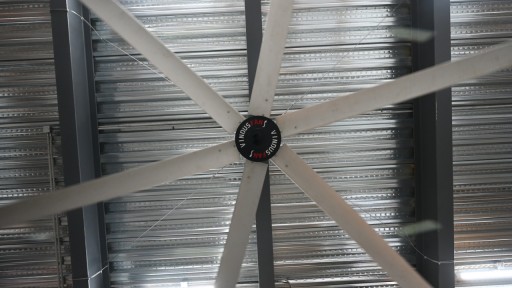
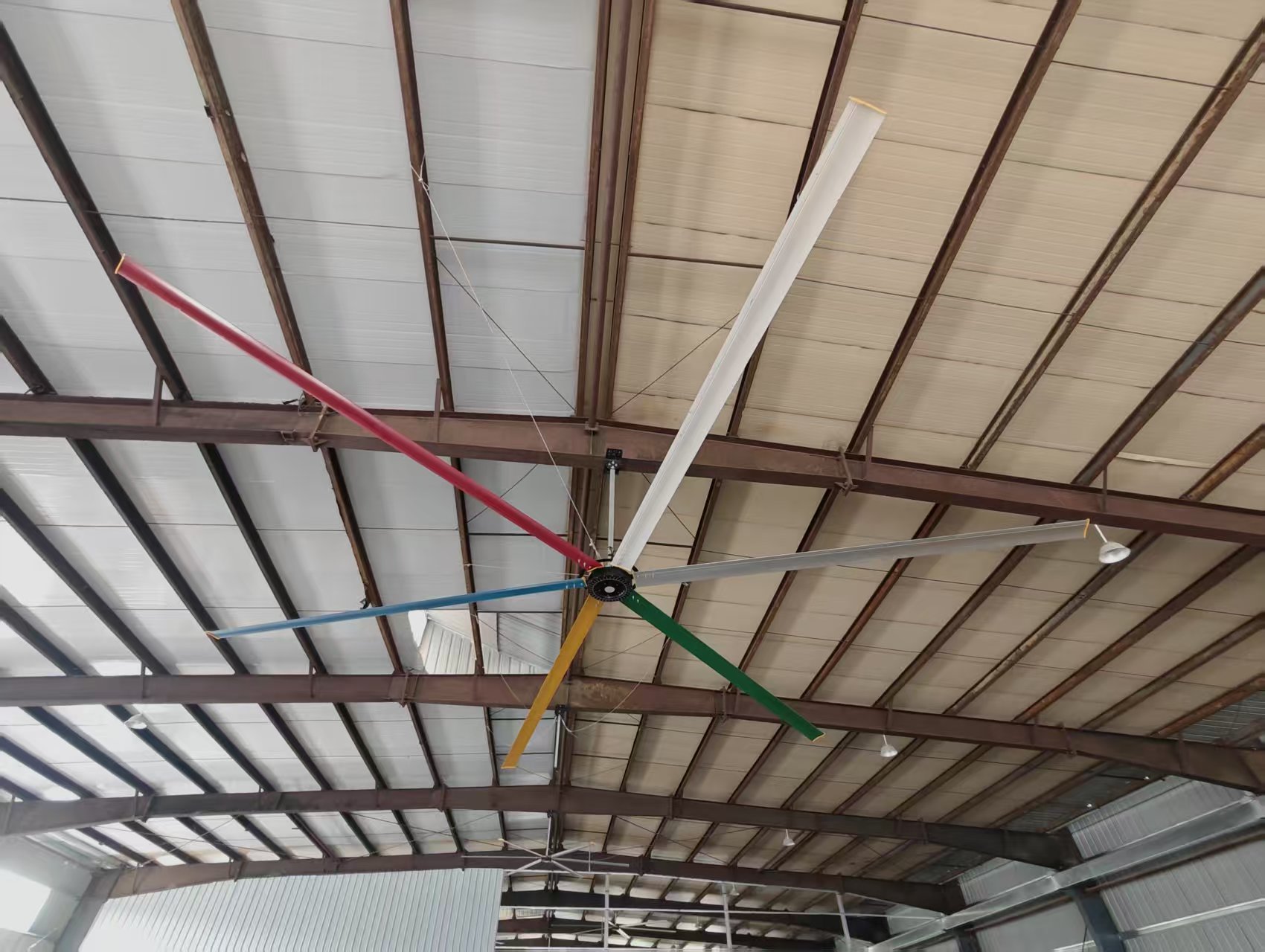
E730 installed-product reference; the image does not establish control-system performance.
Source file: DSC_9691.JPG
Define Expectations Before Adding Units
A future expansion plan should be specific enough to discuss. Instead of saying that the system may grow, explain the likely additional areas and whether they belong to the same building. Ask how compatibility will be documented if equipment is purchased in stages. A stated maximum unit count is only one part of the question; supported functions and the configuration of each stage also matter.
Do not assume that centralized control automatically includes building-management integration, remote internet access or automated environmental control. Those functions are not established by the brief used for this article. If a project requires any of them, list the requirement explicitly and request a model-specific response before treating it as part of the system.
Speed and Direction Should Follow the Use Case
The E730 website materials describe speed adjustment and forward and reverse operation. These features allow an operating discussion to go beyond a simple on-or-off choice. The appropriate settings depend on the application and should be established using the product instructions and observations in the occupied area. A feature list alone does not determine the right setting for every season or building.
During commissioning, the responsible team should confirm the intended controls, demonstrate the approved operating procedure and record the accepted settings where appropriate. The aim is a clear handover: operators know which controls they may use and where to find help. This is a planning recommendation, not a report that a particular commissioning event has already taken place.
Keep Selection, Installation and Use Connected
Control choices should be recorded alongside the fan model, electrical requirements and mounting information. Separating them can leave an installer with a product name but an unclear operating scope. The final equipment schedule should identify what is included, what is optional and what must be supplied or arranged at the site. These distinctions help avoid different teams working from different assumptions.
When comparing proposals, request the relevant controller documentation and ask which manual applies to the offered configuration. Confirm who will verify electrical compatibility and carry out the installation. Structural and electrical work must be reviewed by qualified people using the applicable instructions and local requirements; an article or sales overview cannot serve as that approval.
Build a Clear Control Brief
An effective control inquiry includes the number of proposed fans, occupied zones, operating schedules, expected users and any expansion plans. Add the required supply details and any desired functions that go beyond ordinary local adjustment. This turns an appealing product feature into a requirement that can be checked in writing.
The E730 control information offers a useful starting point for that conversation. Its value lies in understanding how the selected fan configuration will be used, not merely in collecting interface features. Share your operating brief with your inquiry and ask for a configuration-specific response. A well-defined control plan helps the product, installation documentation and everyday operating expectations stay aligned.
Navigation
 E730 HVLS Fan Controls: A Closer Look at Operation and PlanningSep 04, 2026
 Our Industrial Ceiling Fan Focus: Products, Applications and Clear InformationSep 04, 2026
 How Does a PMSM Motor Work? The Core Technology Behind HVLS Industrial FansApr 24, 2026
 Why Do Large Industrial Fans Outperform Small Fans? The Science Behind HVLS TechnologyApr 23, 2026
Send Us A Message